
International Day of Woman and Girls in Science is an initiative launched by the United Nations in 2015 to recognise the critical role women have played in scientific breakthroughs and to inspire and encourage girls to pursue careers in STEM (Science, Technology, Engineering and Mathematics) fields.
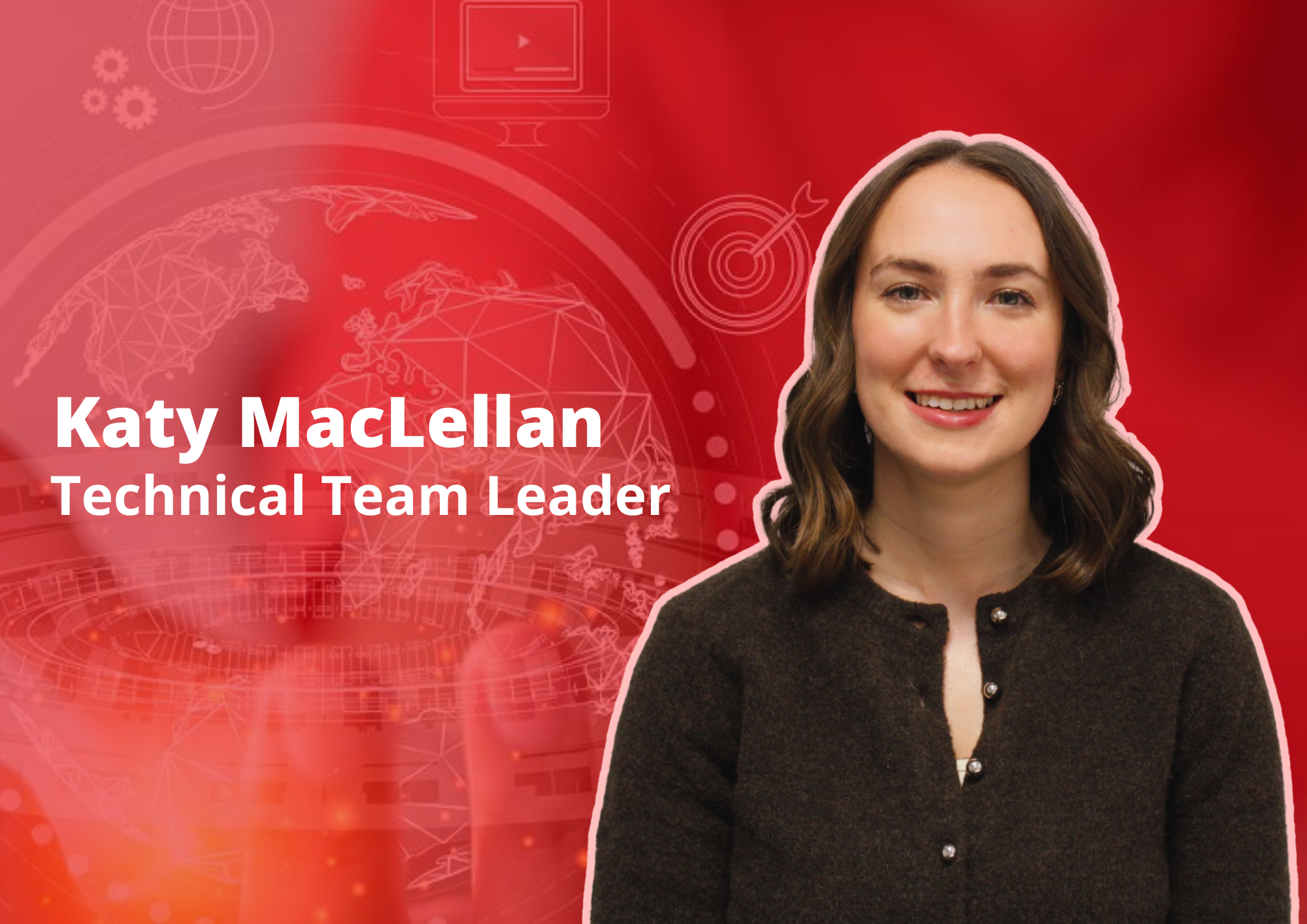
Ahead of this years celebrations on the 11th February Katy MacLellan, one of our Technical Team Leaders at Symbiosis, was interviewed by PharmaTech.com about her own STEM journey, who inspires her and what innovations are next for the Pharmaceutical industry. You can read some of that interview below:
. First of all, can you introduce yourself and give us a bit of background on your role and expertise?
My name is Katy MacLellan and I am one of the Technical Team Leaders here at Symbiosis. Symbiosis are a CDMO based in Stirling, Scotland specialising in GMP Sterile manufacturing of injectable drug products and I work on tech transfers for client projects.
I’m originally from South Uist, an island off the coast of Scotland where access to STEM careers is limited but I grew up with a keen interest for science; and I was able to achieve a master’s in chemistry and drug discovery from Strathclyde university. I spend my master’s placement year working at Pfizer in Cork, Ireland where I was first exposed to pharmaceutical manufacturing and where I have found my interest lies and where I felt best suited my strengths in problem solving.
After graduating with my master’s degree in chemistry, I moved back to Cork to work for Eli Lilly where I had fantastic mentorship from women in leadership roles. Seeing women in leadership increased my drive for success as I felt achieving my goals was more realistic. During this time, under the mentorship of my colleagues, I developed networks and relationships which have contributed to my success.
After COVID I took around 8 months off to travel around Southeast Asia and Australia. This was a fantastic experience where I was able to meet a diverse spectrum of people and get a new perspective on life.
While living in Australia I was working for CSL Seqirus, where I obtained experience in the validation side of pharmaceutical manufacturing. One of the things that drew me to CSL as a company was that over 50% of their workforce was women, which is rare in STEM. This showed the company’s commitment to ensuring women in STEM have access to opportunities to allow us to succeed.
Since moving back to Scotland, I started working for Symbiosis. We have a fantastic team here and it has been a pleasure working with everyone. Symbiosis also has a diverse leadership team with representation of women within STEM and I’m am looking forward to continuing my career here.
. What are some of the benefits of STEM programs for girls in school? How do these programs translate to women building careers in the pharmaceutical industry?
STEM programs in schools are necessary for visibility of the diversity of career paths and visibility of what women can achieve in their careers in the pharmaceutical manufacturing industry. I was not aware until my placement year at university of all the essential roles involved in making a pharmaceutical manufacturing plant effective and there’s something for every type of person including roles in operations, quality assurance, engineering, quality control, process development, health and safety, supply chain logistics, project and construction management, the list goes on! If we have visibility from an early age of the types of roles that are available in the pharmaceutical industry it will make us as women more likely to engage with STEM courses at university as an entry point.
Financial support such as university grants, paid placements/ internships and industry mentorship programmes are ways in which we can encourage women to consider STEM careers.
It’s within pharmaceutical manufacturing that research is realised to manufacture medicines. The challenges we face when ensuring a safe product for patients and a safe process for manufacturing are engaging ways of putting the critical thinking skills developed in STEM programs into practise.
It is important that women working in the pharmaceutical industry encourage young women to explore their interest in science. It can seem a daunting prospect to enter a career in a typically male dominated industry so support networks for women within the workplace and between industry and universities are essential to bridge the gap for young women entering careers in pharmaceutical manufacturing. I personally had a fantastic network of supportive female mentors while working in previous roles whose guidance has shaped my career so far.
. How do women working in STEM fields uniquely contribute to areas such as rare disease treatment development?
Science is for everyone, and women in STEM can uniquely contribute their individual ways of thinking to improve areas such as rare disease development.
Women in STEM have made fantastic contributions to areas such as rare disease treatment such as Dr. Caroline Barelle who founded Elasmogen, which is working to innovate immune mediated disease.
. What exciting innovations do you see on the horizon for the pharmaceutical industry?
I am always interested in process analytics, as my introduction to pharmaceutical manufacturing was in the Pfizer manufacturing process analytics and control department. Advancements in the analysis of process data used to determine root causes for process issues or to highlight out of trend data before an issue occurs will always be beneficial in the pharmaceutical manufacturing industry.
Another subject I have been finding interesting lately is AI and machine learning in Drug Discovery. Drug discovery is typically a long process spanning a decade or more however with advancements in AI to streamline this pathway, assist in improving lead target identification and the potential for safer drugs evaluating existing data this may reduce critical timelines to bringing a drug to clinic.
. Who are you inspired by in the pharmaceutical industry?
On a personal level I am inspired everyday by the women I work with. I have had some fantastic female mentors who have supported me professionally and personally throughout my career to date. The support of female mentors has helped me to decide which direction I would like my career to progress in and having visibility of women in leadership positions inspires hope for my future.
I attended a conference recently where I had the pleasure of meeting Dr. Catherine Green, her passion for vaccine development was inspiring. Her story about how the Oxford AstraZeneca COVID-19 vaccine was developed in such a short timeline was an exciting example of the pace pharmaceutical development and manufacturing can move at in a time of need and her contribution ultimately saved countless lives throughout the COVID pandemic. This especially hit close to home with my role at Symbiosis as the company played a pivotal role in the clinical development of the Oxford AstraZeneca vaccine, manufacturing nearly one million doses to support clinical trials and enable accelerated regulatory approval in the UK.
. What are you currently working on that you are passionate about?
Symbiosis have recently opened a new manufacturing facility in Stirling, increasing our manufacturing capacity up to 15,000 vials per batch. This additional capacity will allow the company to build long-lasting partnerships with clients as they move clinical trials to larger commercial manufacturing.
I am immensely proud of the Symbiosis team for the hard work and commitment that has gone into getting the facility operational. This has been an exciting project and the passion in our team for ensuring manufacturing in this facility will be successful has been inspiring.